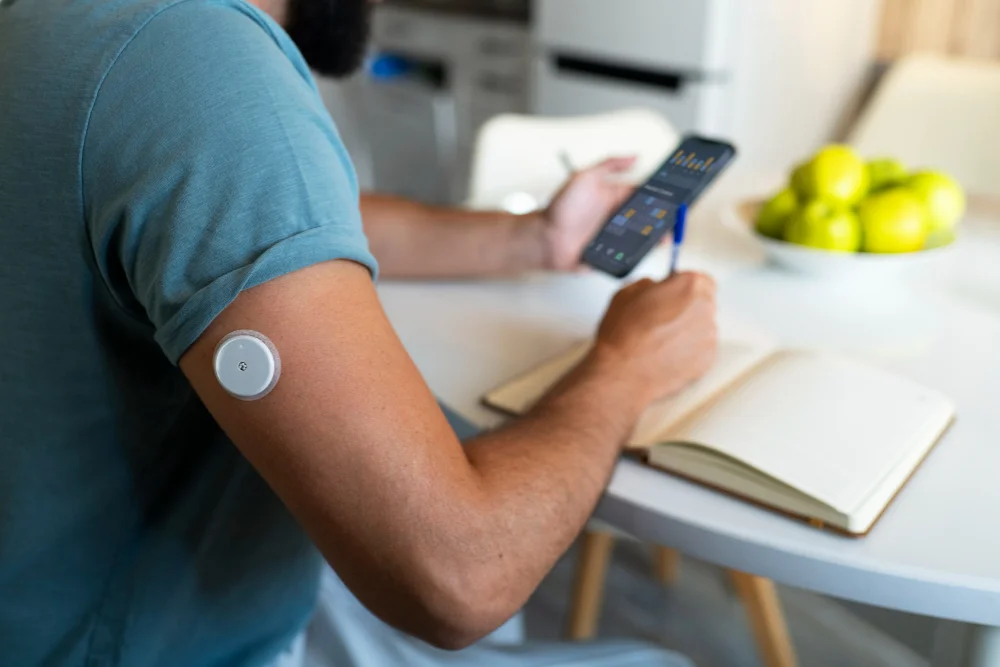
The U.S. Food and Drug Administration has authorized Abbott’s Libre Duo 10 Day system, the first wearable device in the U.S. that continuously measures ketone levels, and the first in the world to continuously monitor both ketones and blood sugar in single sensor.
For the estimated 40.1 million Americans living with diabetes, blood sugar is only part of the picture. Ketones are substances the body produces when it starts using fat instead of glucose for energy. A small amount can be normal in some circumstances. However, when there is not enough insulin in the body, a significant buildup can happen. This can lead to diabetic ketoacidosis (DKA), a serious complication of diabetes that can develop quickly and become life-threatening if left untreated.
Until now, people had to use separate blood or urine ketone tests that only provided a single measurement at one point in time. Those tests couldn’t show if ketones were rising or falling. The Libre Duo 10 Day addresses this gap by continuously tracking ketones.
How the Libre Duo 10 Day works
It is a small wearable patch placed under the skin of the upper arm. It continuously measures glucose and ketones in the fluid between the cells (interstitial fluid). The device takes readings every minute and sends them to a compatible smartphone, where users can see their current levels and trend arrows showing whether numbers are going up or down.
Ketones are measured in the background, and if levels reach a concerning threshold, you’ll get a timely alert.
The sensor is designed for up to 10 days of wear. It integrates with Abbott’s latest generation Libre app, LibreView for healthcare providers, and LibreLinkUp for caregivers.
Abbott is also working with leading insulin pump manufacturers to integrate automated insulin delivery (AID) systems with this device. It is expected to be compatible with Beta Bionic’s iLet and Sequel Med Tech’s twiist AID systems by the end of 2026, with integration for Insujet, Tandem, and MiniMed devices following in 2027.
What did clinical testing show?
The FDA’s authorization is based on a review of clinical and performance data from six clinical studies enrolling more than 600 participants aged 2 years and older. The results showed that the device accurately tracked clinically meaningful differences in ketone levels across its ten-day wear period, including identifying ketone levels before the onset of diabetic ketoacidosis.
Clinical testing also demonstrated that 84.1% of sensors lasted the full ten days in adults, while 68.8% of sensors lasted the full ten days in children.
The FDA authorized the device through its De Novo pathway, which is used for certain new types of medical devices that do not have an existing legally marketed equivalent.
Who can use the Libre Duo 10 Day?
The device is authorized for people aged 2 years and older living with diabetes, especially those at risk of getting DKA. This includes those with type 1 or type 2 diabetes who:
- Use insulin
- Take certain glucose-lowering medications, such as SGLT2 inhibitors (Jardiance, Farxiga, Invokana)
- Have a serious illness, like pneumonia, urinary tract infection (UTI)
Availability and cost
Abbott plans to launch the Libre Duo 10 Day in the U.S. later this year. The device has already received CE mark approval in Europe, with two versions available: Libre Duo (15-day wear for adults 18 and older) and Libre Duo 10 Day (10-day wear for ages 2 and older).
Abbott has not yet announced a U.S. list price or detailed insurance coverage for the device.
Could the alarms become too much?
Yes, they could. Alarm fatigue is an important concern for any wearable that continuously monitors a health metric. If a device produces frequent alerts, users may begin to ignore them, silence them, or become anxious about responding to every notification.
To reduce alarm fatigue, an international panel of experts published guidelines recommending that:
- An alarm should generally sound only if ketone concentrations rise above the “urgent high” threshold of 3.0 mmol/L
- Monitors should include trend arrows (similar to those used in CGMs) to show whether ketones are rising or falling
- Users should have a blood ketone meter available to use if they experience symptoms of elevated ketones that don’t match their continuous ketone readings
- Users should receive education on what elevated ketones mean and what actions to take
The Bottom line
The FDA’s authorization of the Libre Duo 10 Day marks new step in diabetes monitoring. It will help make ketone monitoring easier in everyday life, potentially helping users to seek help before they develop DKA.
Its real-world value will depend on accuracy, cost, access, and how people respond to its alerts. Talk to your doctor if this device is right for you.