Water softeners are household devices used to treat hard water—a type of water that contains high amounts of dissolved calcium and magnesium. By removing these dissolved minerals, water softeners help prevent scale buildup in pipes and appliances, extend the lifespan of plumbing, improve soap lathering, make laundry feel soft, and improve skin health in some people.
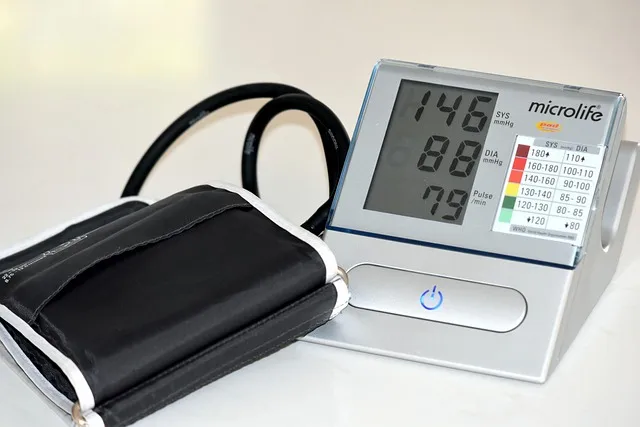
The water softening process introduces sodium into your water. If you have high blood pressure (hypertension), this may affect management of your condition.
In this article, we’ll explore how water softeners work, how they impact blood pressure, and what you can do to stay safe.
How do water softeners work?
Most water softeners use a process called ion exchange, where “hard” minerals like calcium and magnesium are removed from the water and sodium is added in their place.
The amount of sodium added depends on the hardness of the incoming water. The harder the water, the more sodium is introduced during the softening process.
Hardness of water is measured in grains per gallon (gpg). You can find out the hardness of water coming to your home by using a home water test kit or contacting your local water authority.
You then multiply this number by 8 to find out how much sodium (in milligrams per liter) is added to your water. For example, 10 gpg hardness = 80 mg of sodium per liter of softened water.
Despite having additional sodium, softened water typically doesn’t taste salty.
Does sodium in softened water affect blood pressure?
The sodium content in softened water can vary widely depending on the hardness of the original water, but a commonly cited study estimates an average of 278 mg of sodium per liter. That is about 66 mg of sodium per 8-ounce (240mL) glass. This still qualifies as a low-sodium beverage according to the U.S. Food and Drug Administration food and beverage labeling guidelines.
Therefore, most healthy people can take softened water without worrying about it’s health risks.
The American Heart Association advises that adults with high blood pressure limit their daily sodium intake to no more than 1,500 mg.
Drinking 2.5 liters of softened water, at an average sodium concentration of 278 mg/L, contributes about 695 mg of sodium daily. This is nearly half the recommended limit for people with high blood pressure. And because may people don’t consider the sodium in their drinking water, they may unknowingly exceed their daily sodium allowance, potentially worsening their blood pressure control.
Do water softeners have other health risks?
People with heart failure or kidney disease, like those with high blood pressure, are medically required to stick to a low-sodium diet. Theoretically, taking softened water can increase their sodium intake and worsen their symptoms. However, evidence to support this relationship is limited and inconclusive.
If you have any of these conditions, check with your doctor to see if softened water is right for you.
For anyone who’s softening system is not properly maintained, bacteria may accumulate and increase the risk of infections.
Are there alternatives to sodium-based water softeners?
Yes, you can use salt-free water conditioners. These don’t add sodium to your water. They also don’t remove “hard” minerals, but change their structure so they don’t stick to surfaces.
Other ways you can limit sodium in your drinking water include:
- Using potassium chloride instead of sodium chloride for the ion exchange process. Keep in mind that potassium chloride is typically more expensive than sodium chloride and isn’t suitable for people with kidney disease.
- Using reverse osmosis systems to filter water for drinking and cooking.
- Installing a separate cold water line and faucet that delivers unsoftened water for drinking and cooking.
The takeaway
Water softeners make water easier on pipes, appliances, and skin. But for people with high blood pressure or sodium restrictions, they may add unwanted sodium to the diet. This is especially true for people who live in areas with very hard water. If that’s the case for you, talk to your doctor before drinking softened water.